The Democratic Republic of Congo are going to the 2026 FIFA World Cup. A narrow 1-0 extra-time victory over Jamaica in the FIFA Inter-confederation playoff - tense, grinding, and ultimately historic - secured the Leopards one of the final berths in next summer's tournament, ending a 52-year absence from the sport's biggest stage. Across the DRC, from the capital to the country's most remote corners, Tuesday night belonged entirely to football.
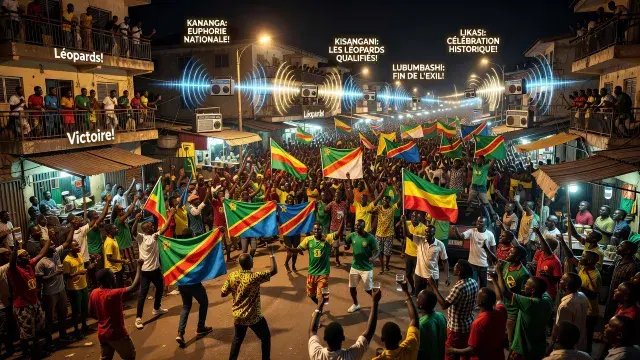
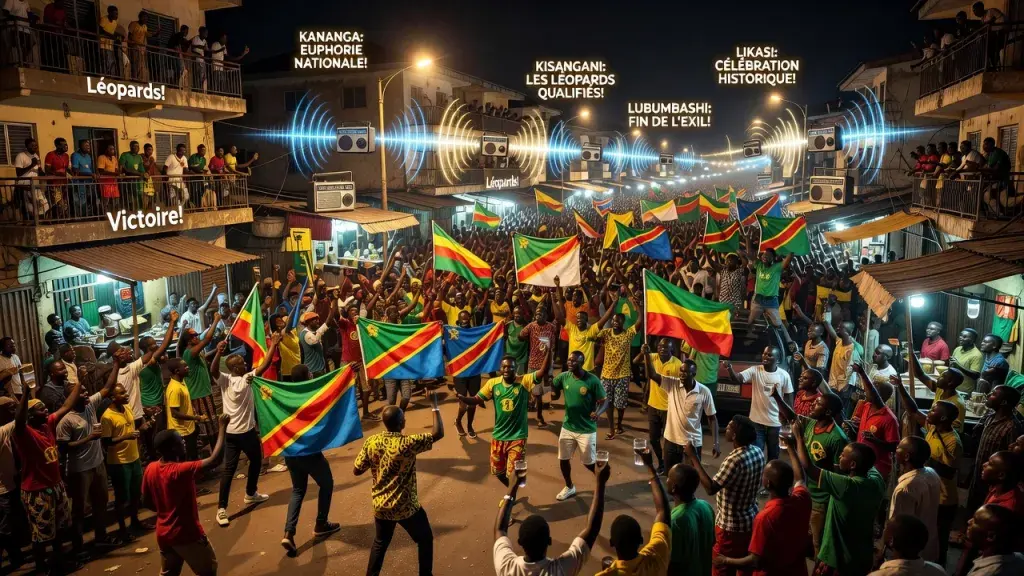
The final whistle did not arrive without anxiety. Congo made the country wait through ninety minutes and into extra time before the slimmest of winning margins was confirmed, and even then the party didn't fully ignite until the referee's whistle made it real. From Kananga to Kisangani, from Lubumbashi to Likasi, the result crackled out of shortwave radios and set off celebrations that ran well into the night - streets alive with rumba and ndombolo, lotoko raised in ngandas and buvettes across Kinshasa. For fans of a sport as varied in its spectacle as football, where everything from five-a-side futsal odds to continental playoff drama occupies the global football calendar, it is rare that a single result carries this much accumulated weight. This one did. futsal odds
The DRC become the tenth African nation to qualify for the 2026 edition, which will be hosted across the United States, Canada, and Mexico - a tournament expanded to 48 teams that, for the Leopards, has finally reopened a door that has been shut since 1974.
The Ghost of Zaire: A Wound That Festered for Half a Century
To understand what Tuesday meant, you have to understand what 1974 left behind. Zaire - the nation's name at the time - arrived at that West Germany World Cup as Africa's first sub-Saharan representatives, pioneers in every sense. Yet what the world retained was not the pioneering, but the chaos. Three group-stage defeats, including a 9-0 hammering by Yugoslavia, consigned that squad not to the footnotes of history as trailblazers, but to an enduring caricature.
The image most replayed is the freekick incident against Brazil, when defender Mwepu Ilunga sprinted from the wall and booted the ball away before Brazil had even taken the set piece. Over the decades that clip has been stripped entirely of its context - there were reports, never fully resolved, of internal turmoil, unpaid wages, and political pressure bearing down on the squad - and has been reduced to a single symbol of incompetence. Zaire's story at that World Cup has been told for fifty years almost exclusively as farce, and the actual football those players produced in the years before Germany has been almost entirely forgotten.
Because in the late 1960s and early 1970s, Zaire were genuinely formidable. They were a continental power, African champions, a team built on technical quality and collective organisation that had earned their place in West Germany through merit. The context collapsed around them in Germany, for reasons that extended well beyond the touchline, but the caricature outlasted the nuance. For Congolese football supporters, that ghost has never fully left the building.
Fallen Giants Reclaiming Ground
The DRC's qualification is significant beyond the sentimental. The Leopards have long been regarded as one of African football's great underachievers relative to their resources - a vast country with a deep pool of talent, a passionate football culture, and a club scene that has historically punched at a continental level. Yet sustained success on the international stage has proved elusive in the decades since Zaire's turbulent debut.
Back-to-back AFCON finals appearances in 2015 and 2023 - the latter ending in defeat to hosts Ivory Coast - illustrated both the upward trajectory and the ceiling that has proved difficult to break through. Qualification for the World Cup, the sport's true global measure, represents a different category of achievement entirely. If the AFCON runs have rebuilt belief, this playoff result plants a flag.
Jamaica, for their part, were no pushover. The Reggae Boyz have developed meaningfully as a footballing nation and their presence in an inter-confederation playoff reflected genuine competitive credibility. That Congo prevailed - tightly, without room for comfort, in extra time - is what playoff qualification demands. It is rarely elegant. It simply has to be enough.
What the 2026 Tournament Means for Congo and African Football
The expanded 48-team format at the 2026 World Cup handed African football nine guaranteed group-stage berths, plus the playoff route that the DRC ultimately navigated. For the continent, it is the largest presence in World Cup history, and Congo's inclusion adds a team with the historical standing - and now the current form - to make noise on that stage.
The question of whether the Leopards can avoid being written into the same script as 1974 will define much of the build-up conversation. The squad is not the same team. The football world is not the same world. The tournament will be played in front of a significant Congolese diaspora across North America, in stadiums that will feel the full force of what that qualification means back home.
Kinshasa celebrated through the night on Tuesday. The rattle of rumbas, the clink of glasses, the shouts from balcony to balcony - all of it pointed in the same direction. Fifty-two years is long enough. The Leopards are back.